
Fixed Price vs Time and Materials vs Dedicated Team: How to Choose the Right Software Contract

Manish Kumawat
Last Updated on: 27 November 2026



Do you know most software development projects do not fail because the developers are less experienced or the code is bad? They fail because the contract did not match the work. Yes, choosing fixed price vs time and materials vs dedicated team is where business leaders fail.
A business signs a fixed price deal for a product nobody fully understands yet, and every small change turns into an argument. A procurement team picks an open-ended hourly deal, and then sees the budget goes beyond the plans with no clear end date. Both stories are common. Both are avoidable.
When businesses come to a position to choose fixed price vs time and materials vs dedicated team, they face many confusions. Most businesses choose software development contract models only considering the costs. But is it the ideal way to choose the contract model?
Here we will see fixed price vs time and materials in plain depth, show where a dedicated team fits, and share simple ways to protect your budget under each option. If you are comparing software development pricing models right now, this should save you a few painful expenses.
Table of Contents
15 sectionsWhy the contract choice should come before the RFP
Many businesses are in a hurry to write the requests for proposals first. They list the features, send the document to five agencies, and compare the numbers that come back. The problem is that the software agencies are not quoting the same thing. One agency assumes the scope is fixed. Another assumes it will change and prices by the hour. A third sends a monthly development team fee.
Businesses compare and choose cheap ones. It's just like comparing apples with oranges, and the cheapest quote often turns out to be the most expensive project.
When you pick the contract type first, the RFP gets clearer. You can ask every software development company to price the same model, or to price two models side by side. You can ask sharper questions about change requests, acceptance tests, and exit terms. And you can score the proposals on the same basis, which makes your decision easier to impress your board, your finance team, or your investors.
The contract also decides who carries the risk of the software development projects. In simple terms:
- With a fixed price, the agency carries most of the cost risk. You carry the risk of getting the scope wrong.
- With time and materials, you carry the cost risk. You keep the freedom to change direction.
- With a dedicated team, you pay for capacity. You may face the risk of managing how that available capacity is used.
This risk split shapes everything else: the price, the speed, the flexibility, and even how the relationship feels week to week. So it deserves a clear decision about the type of contract before anything else.
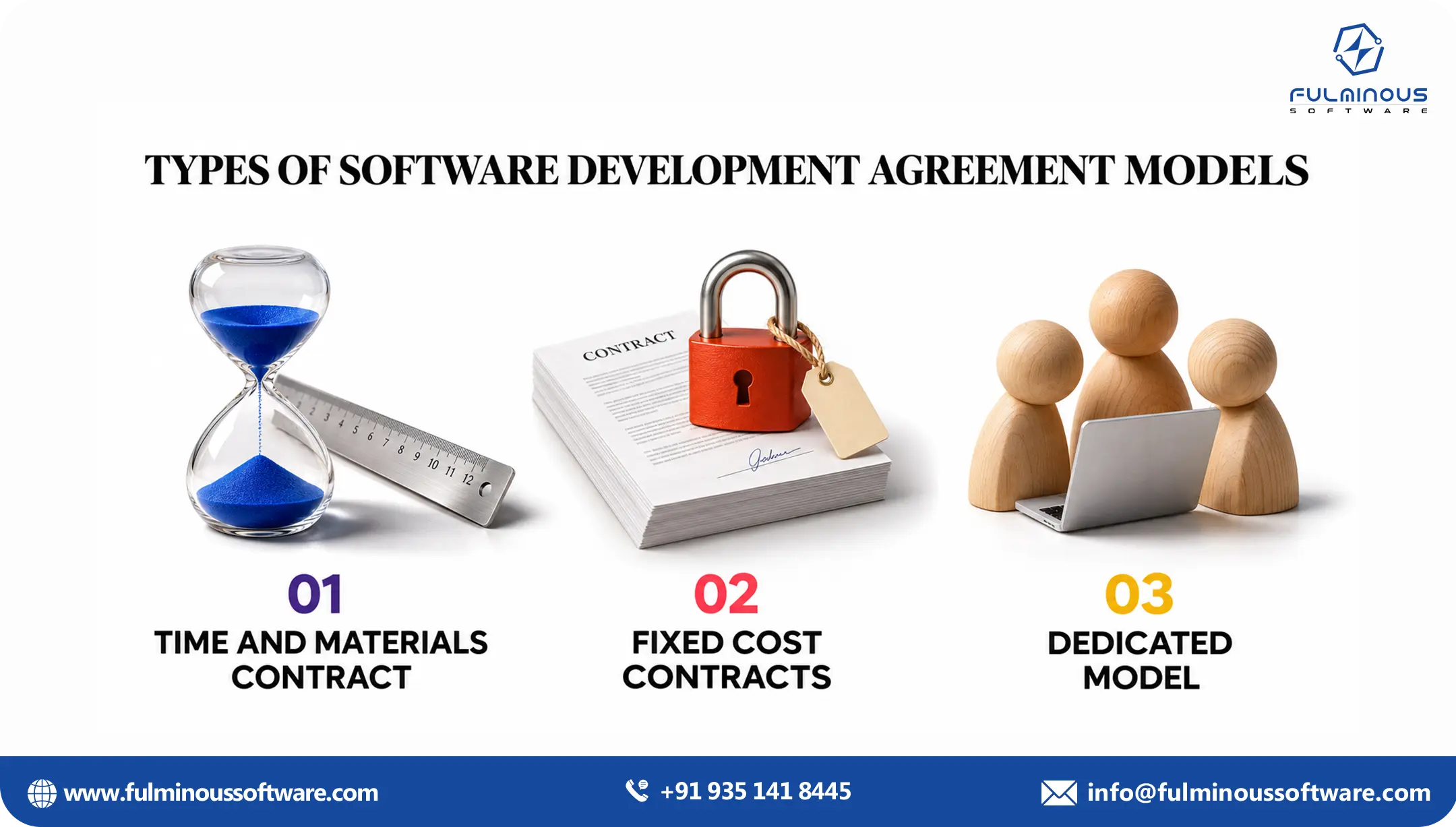
The three software development pricing models in short
Before we go deep into each contract type, here is a quick view of the three common software development pricing models.
Fixed price. The agency agrees to deliver a defined scope for a set fee. Payment is usually split into milestones. You know the number on day one.
Time and materials (T&M). You pay for the actual hours worked, at agreed rates, usually billed every month. You often get an estimate and sometimes a cap, but the final cost depends on the work that really happens.
Dedicated team. You pay a monthly fee for a team that works only on your product. This model is about capacity and team structure more than about pricing, so we keep it short in this article. It deserves its own discussion.
The first two are true pricing and contract choices. They decide how money moves and who is responsible when things change. That is why most procurement teams start there.
Not sure which contract suits your project? Talk to our team.
Get a Free QuoteFixed price contracts: how they work
A fixed price contract is the easiest one to explain to a finance team. You agree on what will be built, how much it will cost, and when it will be done. The software agency takes the task and delivers it for that amount, no matter how many hours it really takes.
When a fixed price contract works well
Fixed price is a good fit when the software development work is clear and unlikely to change. Think of:
- A small, well-defined product or a first version with a short feature list
- A website or app that copies a pattern both sides already know
- A migration or integration where the start and end points are known
- A project with a hard budget limit, such as a grant or a board-approved amount
- Work where you already have detailed designs, user stories, and acceptance rules
In these cases, a fixed price gives you comfort. The budget is easy to approve, easy to track, and easy to explain.
Where fixed price goes wrong
The weak point is changes in software development plans. Software is rarely understood fully on day one. You learn things as the project moves ahead. Users react. Markets move. Your competitor launches something new. If your scope is locked in the contract, each of these changes becomes a change request, and each change request becomes a rise in overall costs
There are other quiet problems too:
The agency adds a buffer. To protect themselves from the risk, many software development services add extra margin to a fixed quote, sometimes 20 to 30 percent. You already pay expenses related to risks that may never happen.
Quality can slip. If the agency is losing money on the project, there is a pull towards doing the minimum that meets the written scope.
Writing the scope takes time. To get a fair fixed price, someone has to write a detailed spec. That can take weeks, and it still may miss things.
Disputes get tense. When the document says one thing and the business needs another, both sides start reading the contract line by line instead of solving the problem.
The fixed price is only truly fixed if the scope of your software development project stays fixed. For many products, that is the part that does not hold.
Time and materials contracts: how they work
A time and materials contract is simple at its core. You pay for the time that people spend on your software project, plus any agreed costs, such as tools or licences. Rates are set per role or per person. The agency sends timesheets or reports, and you are billed based on real effort.
When a time and materials contract works well
T&M is a strong choice when the work will change or when the full picture of software development is not clear yet. It suits:
- A new product where you expect to learn and adjust as you go
- Projects with a rough idea but no complete specification
- Long-term products that need steady improvement, not a one-time delivery
- Work that depends on user feedback, tests, or early market results
- Rescue projects where you first need to understand the current code
You also get faster starts. There is no need to spend weeks writing a full spec just to get a price. The team can begin with the most important features and shape the rest as you see real results.
Where T&M goes wrong
The risk is cost drift. If nobody watches the hours, the budget can grow quietly. A time and materials contract with no estimate, no cap, and no regular review is an open door for surprises in expenses. Some other problems to watch for:
No natural end date. Work can continue as long as there are ideas, which feels good until the invoice arrives.
Weak incentives. If the agency earns more when the project takes longer, you need trust and good reporting to make sure the effort is real.
More effort from you. You need to prioritise, review progress, and make decisions quickly. A slow product owner makes a T&M project expensive.
The good news is that every one of these risks can be managed with the right contract terms, which we cover below.
Fixed price vs time and materials: a side-by-side view
Here is a plain comparison of the two models across the points that procurement and founders care about most.
| Point | Fixed price | Time and materials |
|---|---|---|
| Budget certainty | High, if scope stays the same | Medium, depends on controls |
| Flexibility to change scope | Low, changes need approval and often extra cost | High, priorities can shift each sprint |
| Who carries cost risk | Mostly the vendor | Mostly the buyer |
| Who carries scope risk | Mostly the buyer | Shared |
| Time to start | Slower, needs a detailed spec | Faster, can start with a rough plan |
| Price per unit of work | Often higher because of the risk buffer | Often lower, you pay for real effort |
| Best for | Small, clear, stable projects | Evolving products and long-term work |
| Main danger | Paying for a rigid plan that no longer fits | Budget drift without good tracking |
A simple way to read this table: fixed price protects your budget but can hurt your product. T&M protects your product but can hurt your budget, unless you add limits.
Time and materials vs fixed price: which one is cheaper?
This is the question we hear most, and the honest answer is: it depends on how well you know your scope.
If you know exactly what needs to be done, a fixed price can save money. The agency knows the job, and you avoid surprises. But if the scope is unclear, the agencies will price in the uncertainty. You pay for it whether or not the problems show up.
On the other side, T&M tends to look cheaper at the start because there is no risk buffer. But if the project is poorly managed, the final bill can end up higher than a fixed quote would have been.
So the real comparison is not hourly rate against fixed fee. It is the total cost of the outcome you actually need, including changes, delays, and the time your own team spends managing the work. A low fixed price that delivers the wrong product is not cheap. An hourly deal that delivers the right product on time often is.
See: How We Work
Where a dedicated team fits in
A dedicated team is the third option in the title of this post, so here is a short note. In this model, you get a group of engineers, and often a designer, tester, and project lead, who work on your product on an ongoing basis. You pay a regular monthly amount for the team.
It works well for long products with a steady stream of work. It is closer to building your own team than to buying a project. We will not go deeper here, because choosing a team structure is a separate decision from choosing a pricing and contract model. If you are still deciding how to pay for the work, focus on the first two models above. Once you know how you want to share risk, the team question becomes much easier.
How to keep your budget under control in each model
Budget control is not about the model alone. It is about the habits and clauses around it.
Under a fixed price contract
Write the scope in plain language. Write down what is included and what is not.
Tie payments to milestones you can test. Pay only when the work is done, not on a set date.
Agree a change process up front. Decide how a change is estimated, who approves it, and how fast the agencies must respond.
Define "done". Write clear acceptance criteria for each milestone so there is no debate later.
Keep a small reserve. Set aside 10 to 15 percent of the budget for the changes that will almost surely come.
Under a time and materials contract
Ask for an estimate and a cap. A "not to exceed" amount gives the agencies a target and gives you a safety line. Any move above the cap needs your written approval.
Work in short sprints. Two-week cycles let you see progress and stop or change direction before much money is spent.
Get weekly or sprint-based reports. You should see hours by person, by task, and against the plan.
Review burn rate. Compare the money spent to the work finished. If spending moves faster than output, raise it early.
Set a monthly budget ceiling. Even without a total cap, a monthly limit stops silent growth.
In both cases, name one person on your side who owns the budget and one who owns the product decisions. Many cost problems come from nobody being clearly in charge.
Now compare engagement models!
Want a no-obligation price for your project under any of these models?
Get a Free QuoteContract risk: the clauses that matter most
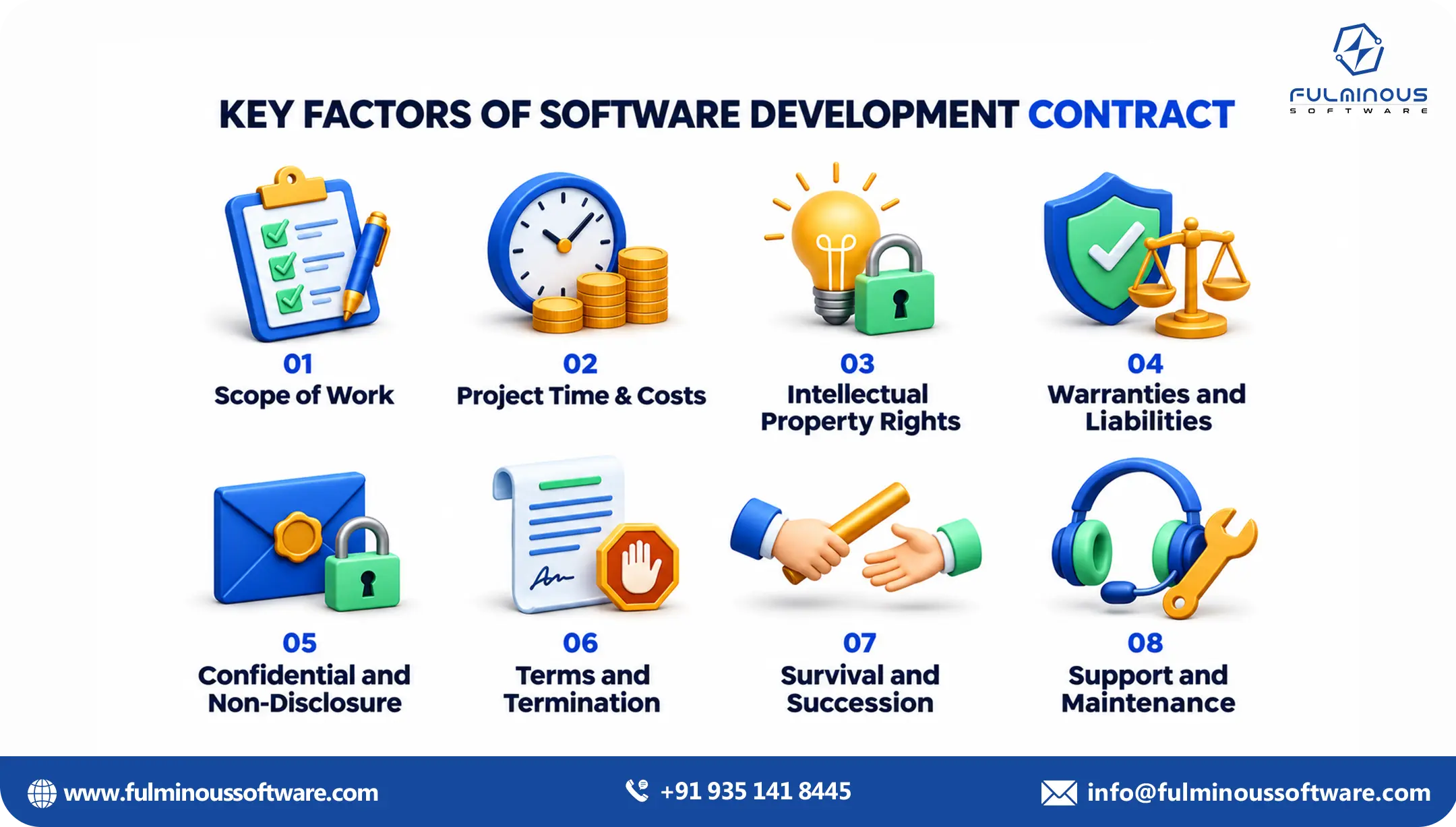
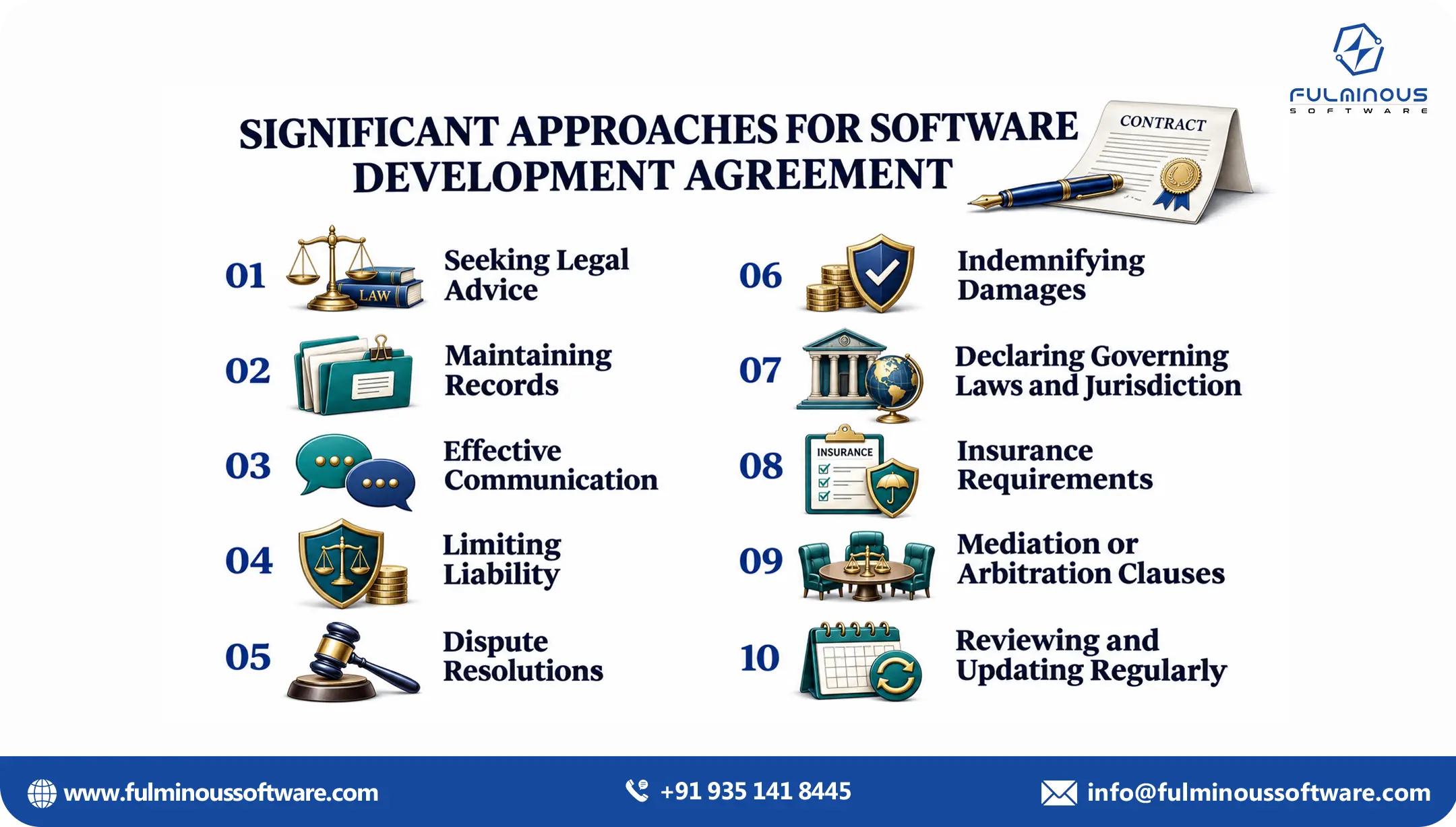
Whether you choose fixed price or T&M, the same contract areas can protect you. When you review a draft, look closely at these:
Scope and deliverables. Exactly what you will get? Vague words such as "and similar features" are a warning sign.
Change control. How are changes requested, priced, and approved? How soon can you get reply?
Acceptance. How long do you have to test? What happens if something fails?
Intellectual property. The code and designs you pay for should be yours, fully, from the day they are created or paid for.
Rates and rate changes. In a time and materials contract, check hourly or daily rates by role and whether they can rise during the project.
Team stability. Can the agencies swap people without telling you? Who pays for the learning time when someone leaves?
Warranty and support. Is there a period after delivery when bugs are fixed at no extra cost?
Exit and handover. Can you stop with notice? Do you get the code, documents, and access to tools at the end?
Payment terms. Make sure invoices match the work and that disputed items can be held back.
Security and data. Confirm how the agency handles your data, access, and any compliance needs.
A strong exit clause is worth special attention. It keeps the relationship honest. When both sides know you can leave with your code in hand, the agency has a reason to keep you happy.
A simple way to decide: five questions
If your business is confused, answer these 5 questions. They will usually point you to the right choice.
1. How clear is the scope today? If you can describe every screen and rule, fixed price becomes realistic; if you can only describe the goal, lean towards T&M.
2. How likely is the scope to change? If you expect feedback, pivots, or new features, a rigid contract will fight you.
3. How strict is the budget? If the amount cannot move at all, fixed price or T&M with a hard cap gives more comfort.
4. How much time can your team spend on the project? T&M asks for active involvement. If nobody on your side has time to guide the work, fixed price may reduce your own effort.
5. Is this a one-off project or a long-term product? One-off projects suit fixed price. Products that keep growing suit T&M or an ongoing team.
When you think through time and materials vs fixed price using these questions, the answer is often clear within a few minutes. And when the answers point in both directions, a mixed approach may be best.
Hybrid options: the middle path
Some times no need to pick only one. Many good contracts mix the two.
Fixed price discovery, then T&M build. Start with a small, fixed-fee phase to define the scope, design the screens, and estimate the work. Then move to T&M, or to a fixed price, with a much clearer picture.
Fixed price core, T&M extras. Deliver the stable core features at a set price. Handle later changes and new ideas on an hourly basis.
T&M with a cap. Hourly billing with a maximum amount. You get flexibility inside a safety limit.
Phased fixed price. Split the project into small stages. Each stage has a fixed price, and you can re-plan before starting the next one.
These hybrids work because they match the model to the level of certainty. Early work is uncertain, so it is priced flexibly. Later work is better understood, so it can be priced with more confidence.
Why choose the contract before you send an RFP
We already discussed why the contract choice should come first. Here is how that helps in practice.
Your RFP becomes tighter. You can ask agencies to quote the model you want, which makes bids comparable.
You learn more from the answers. Agencies that offer only one model may push you towards it for their own comfort. A vendor that can explain several options usually has more experience.
You reduce rework. If you discover halfway through the process that your scope is too unclear for fixed price, you have to restart. Deciding early prevents that.
You speed up approval. Finance and legal teams can review the contract type early, instead of at the last minute.
If your team is about to start agency selection, take a day to talk through the software development pricing models with all the people who will sign, pay, or manage the project. That one meeting often saves weeks later.
Fulminous Software: flexible and affordable contracts for every model
At Fulminous Software, we do not believe in forcing every client into one pricing box. Every project is different, so the contract should be too. We offer fixed price, time and materials, and dedicated team engagements, and we help you choose the one that fits your goals, your budget, and your level of certainty.
Here is what that looks like in practice:
Flexible models. Start with a fixed price for a clear first phase, then move to time and materials as the product grows. Or begin with a dedicated team and adjust as your needs change.
Affordable by design. Our delivery teams are built to give you strong engineering at sensible rates, without a heavy risk buffer on top.
Clear budget control. We use sprint reports, agreed estimates, and optional caps, so you always know where the money is going.
Fair terms. The code you pay for is always yours. Exit and handover terms are clear from the start.
Straight advice. If a model does not suit your project, we will tell you, even if it is not the one that earns us the most.
Our prices:
- Fixed Price: $5,000 – $30,000+ per project
- Time and Materials: $20 – $60 per hour
- Dedicated Team:$ 2,500 – $8,000 per month, per developer
You can read about our process and the way we run projects on our How We Work page. To see the range of services behind each model, visit our outsourcing services page.
Whether you are a founder planning a first product or a procurement lead preparing an RFP, we are happy to walk through fixed price vs time and materials with you, using your real project as the example.
Easily pick: fixed price vs time and materials!
There is no single winner in the debate of fixed price vs time and materials. Fixed price gives you a clear number but can lock you into a plan that ages quickly. T&M gives you freedom but needs good tracking. A dedicated team suits long-running products. The right software development pricing models for you depend on how clear your scope is, how much change you expect, and how much control you want over the budget.
Remember these: first, pick the contract before you write the RFP. Second, match the model to the level of certainty you really have. Third, whichever path you take, add guardrails: clear scope, change control, reporting, and a fair exit. A well-written time and materials contract can be as safe as a fixed price one, and a badly written fixed price deal can be riskier than either.
Ready to see which model fits your project? Compare engagement models with Fulminous Software and get honest, practical advice before you write your RFP.
Ready to choose your contract? Share your idea and get a free quote.
Get a Free QuoteFAQs
Q1. What is the main difference between fixed price vs time and materials?
In a fixed price contract you pay an agreed amount for an agreed scope, and the agency carries most of the cost risk. In time and materials you pay for the real hours worked, so you carry more cost risk but keep more freedom to change the plan.
Q2. Which of the software development pricing models is best for a startup?
It depends on how clear your idea is. Early-stage startups usually learn a lot while building, so time and materials, or a small fixed price discovery phase followed by T&M, often works best. If your first version is small and well defined, a fixed price can also work.
Q3. Is a fixed price contract always safer for my budget?
Not always. It is safer only while the scope stays the same. Once you ask for changes, the price can rise through change requests. A poorly defined fixed price project can end up costing more than a well-managed hourly one.
Q4. How do I stop a time and materials contract from going over budget?
Ask for a written estimate and a "not to exceed" cap, work in short sprints, review hour reports every week, and compare spending to finished work. Assign one person on your side to own the budget.
Q5. Why do agencies often charge more for fixed price work?
Because they take on the risk of the unknown. To cover problems that might come up, many agencies add a buffer to the price. The clearer your scope, the smaller that buffer should be.
Q6. Can I switch from one model to another during a project?
Yes, and many teams do. A common path is a fixed price discovery phase, then time and materials for the build. Just make sure the contract allows the switch and explains how the change will be priced.
Q7. What should be in a time and materials contract?
A good time and materials contract should include role-based rates, an estimate, a cap or monthly limit, reporting rules, a change and approval process, IP ownership, and clear exit and handover terms.
Q8. Does a dedicated team replace other pricing models?
Not exactly. A dedicated team is a way to organise people on your project, with a regular monthly cost. It is a different kind of decision from choosing how to price a defined piece of work. Many buyers first decide how to share risk, and then decide on the team setup.
Q9. How does the choice affect my RFP?
The contract type decides what you ask agencies to quote and how you compare the answers. If you pick the model first, every vendor prices the same thing, and you can judge proposals fairly.
Q10. How can Fulminous Software help me choose fixed price vs time and materials vs dedicated?
We look at your scope, your budget limits, and how much change you expect, and then recommend the model, or a mix of models, that fits. You can start by reading how we work, or talk to our team to compare engagement models for your project.
 Verified
Expert in Software & Web App Engineering
I am Manish Kumawat, co-founder of Fulminous Software, a top leading customized software design and development company with a global presence in the USA, Australia, UK, and Europe. Over the last 10+ years, I am designing and developing web applications, e-commerce online stores, and software solutions custom tailored according to business industries needs. Being an experienced entrepreneur and research professional my main vision is to enlighten business owners, and worldwide audiences to provide in-depth IT sector knowledge with latest IT trends to grow businesses online.



Partner with Top-Notch Web Application Development Company!
Discuss your Custom Application Requirements on info@fulminoussoftware.com or call us on +91-935 141 8445.
15 Days Risk-Free TrialRecommended Articles