How to Choose a Software Development Company: 20 Questions to Ask Before You Sign

Manish Kumawat
Last Updated on: 23 November 2026



Almost every business that has hired a software development partner without proper planning has a story. A project that ran months late. A price that doubled halfway through. A team that went quiet after the contract was signed. A product that worked on launch day but that nobody could safely change afterward.
You may have a budget, a deadline, and a business idea. Now you need someone to develop it in the way you want. Not just someone, but you need experts with plenty of experience and reliability for the long term. And the fear sits right there in the back of your mind: what if I pick the wrong development team?
That concern is fair and needs to be solved wisely. The good news is that most of these problems show up early, before you sign anything, if you know where to look. This guide on how to choose a software development company gives you 20 plain questions to ask, tells you what a good answer sounds like, and points out the warning signs. It is useful for making a safe decision without being deeply technical.
Here we bring you a software vendor selection checklist. Copy the questions into a spreadsheet, ask every vendor the same things, and score the answers side by side. By the end you will also know how to evaluate software proposals in a fair way, so the cheapest or the loudest agency does not win by accident.
Table of Contents
10 sectionsWhy choosing a software partner feels so risky
Collaborating with a software development partner is always a crucial discussion with long-term impact. It's not just all about hiring costs or tech certifications. Three things make it harder to evaluate and choose the ideal software development partner.
You usually cannot judge the work itself. If you are a founder or a procurement lead, you may not be able to read code or tell good architecture from bad. So you end up judging what you can see: the software development company’s website, the sales proposal, the price, and how nice the team is. None of those tell you much about the quality of the software they develop.
Everyone says the same thing on a sales call. Every software development company says it is experienced, agile, and customer-focused. Without good questions, you cannot find whether their claims are real or just exaggerations.
The cost of a mistake comes later. A bad software development vendor rarely fails in week one. The trouble tends to appear in month four or five, when you have already spent a lot of money and changing course is painful.
That is why the work of choosing matters more than the work of negotiating. A little discipline in the selection process of software development partners saves a great deal later. If you are wondering how to choose a software development company without losing sleep, the answer is simple: ask better questions, and compare the answers easily.

Before you talk to anyone: get clear on your side
Imagine you are approaching a software development company to hire, but don't have any clarity about what to build. A software development partner can only be as clear as the information you give them. If the requirements and goals are not clear on your side, how can an agency give the exact project plans?
Before you book a call to discuss with Software developers, write down a few things. It does not need to be a long document. One or two pages is enough. But this is useful to convey what exactly you are looking for:
The problem, not the solution. What business problem are you trying to fix? Slow orders? Manual reporting? Customers leaving? Vendors give better advice when they hear the problem first.
What success looks like. Pick two or three measures. For example: cut order processing time in half, or launch to the first 500 users by a particular date.
Your rough budget and deadline. You do not have to share the exact number, but you should know it. A software vendor who knows the range can suggest what is realistic.
Who decides?. Name the person who has the final say, and the people who must be consulted. Many projects stalled because nobody knew who could say yes.
What already exists. List current systems, tools, and data. Include anything old or messy. Surprises here are expensive later.
If you plan to write a formal request for proposal, or you want to compare contract models such as fixed price and time and materials, those topics deserve their own deep dive. This guide focuses on the earlier step: deciding which companies deserve to be on your shortlist at all, and which one deserves your signature.
The 20 questions to ask a software development company
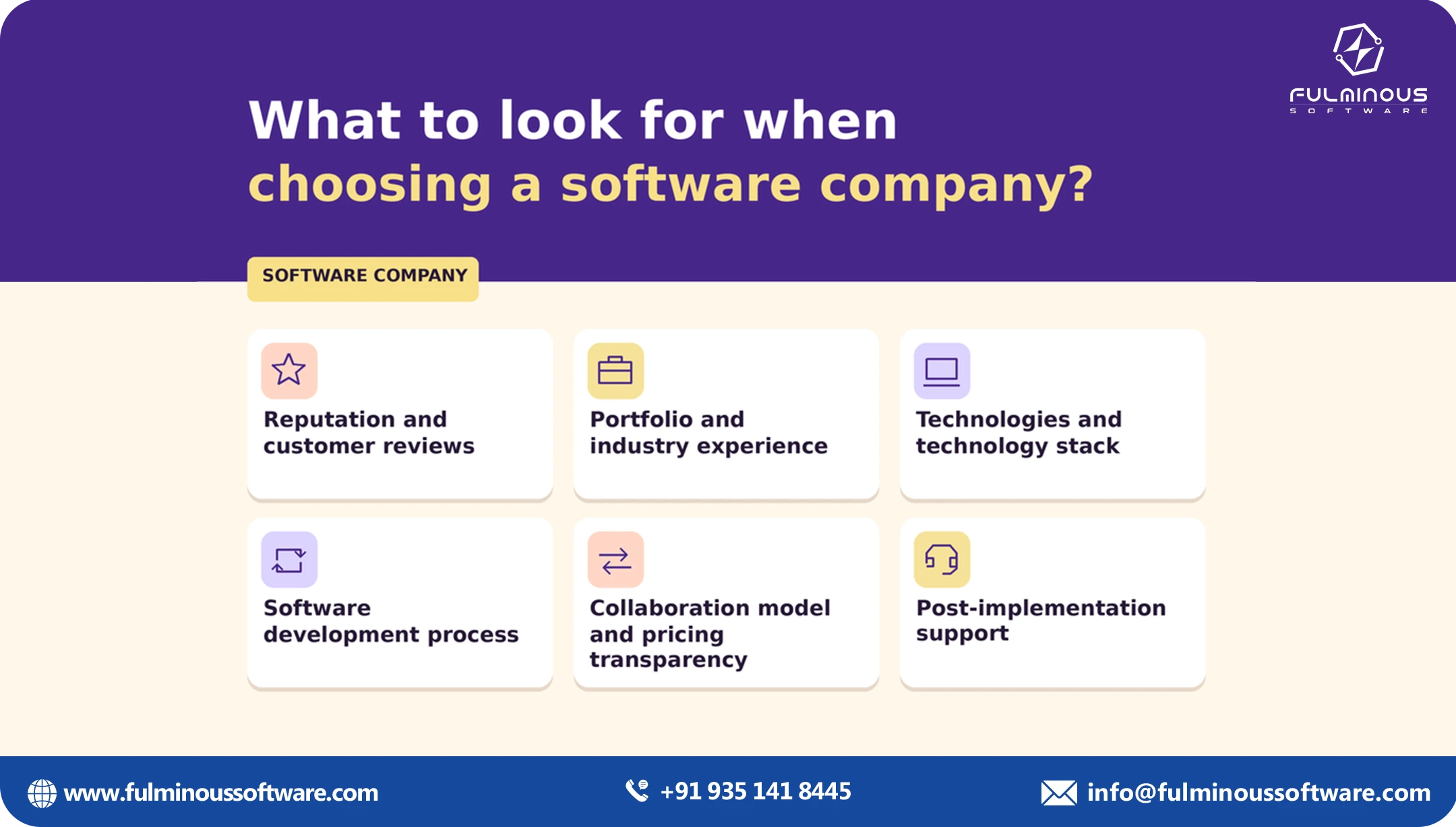
These are the questions to ask a software development company and evaluate every dimension before you hire or any contract is signed. We have grouped them into five areas. You can ask them across two or three conversations, and put the important ones in writing so you can compare answers later.
Part 1: Experience and fit
1. Have you done projects like ours before?
You do not need a vendor who has built the exact same software or digital product. Ask for two or three examples, and ask what was hard about each. A good answer is specific. They talk about real trade-offs, not just success stories. A weak answer is a list of logos and general praise.
2. Can we speak with past clients, including one whose project had problems?
A good software development partner will be glad to introduce you to clients who are happy with their work. A strong agency will also let you talk to a client who went through a rough patch, because they are proud of how they handled it. When you call, ask what the team did when things went wrong, and whether the client would hire them again. Published feedback, as the client reviews on an agency's own site, is useful only for a start, but a direct conversation tells you more.
3. Will the same people stay with us from start to finish?
This one catches many people out. The people who impress you on the sales call may not be the ones writing your software. Ask for names, roles, and experience of the actual team. Ask whether those software experts will stay on your project from start to finish. If the answer is confusing, expect a handoff to a more junior team after you sign.
4. How long do your software development team members usually stay with you?
Every time a software developer leaves, knowledge walks out the door and your project slows down. That's why you need to know the time period. You are not expecting a perfect answer, but a good software agency can tell you roughly how long their people stay and what they do to keep them. If they get defensive, that tells you something too.
Part 2: Process and communication
5. What does your first step look like once we decide to work together?
The best teams do not jump straight into coding. They spend time on discovery: talking to your users, mapping your workflows, and challenging your assumptions. Ask what the first few weeks' milestones are. An agency that gives you a fixed price after a single call, with no discovery, is guessing.
6. How will we know the project is moving forward?
You should never have to wonder what is happening with your investment in software development. Find out when you will get to try working software, not just read a report about it. A healthy process is a short demo every one or two weeks. Find out what tools the team uses to keep track of their work, and whether you can get access to them yourself.
7. Who is our main contact, and how fast do you reply?
Good communication means having a real person you can reach, not just a system of tickets and forms. Ask who you will talk to day to day, what hours they work, and how quickly they respond. If your team is in a different time zone, ask how much overlap there will be. A simple rule: how they treat you while selling is the best they will ever treat you.
8. What happens when our requirements change?
No doubt there will be changes as the software development goes forward. Markets move, users surprise you, and priorities shift. A mature software development partner has a clear, calm way to handle changes: they estimate the impact, tell you the tradeoff, and let you decide. An inexperienced vendor either refuses every change or accepts everything and sends a surprise bill later.
Part 3: Quality and technical approach
9. How do you test your software development work?
Some agencies rush through testing to save time, so it helps to ask. What kinds of testing do they run, and who does it? Does it happen as they build, or only at the end? And what do they do if a bug turns up after launch?
Good signs are automated tests, code reviews, and a staging environment, which is a practice copy of your system. If the developers only check their own work, be careful.
10. How do you handle security and data protection?
You do not need to understand every term, but you need to hear a real answer. Ask how they protect your data, how they manage access, and how they handle rules that apply to your industry. Ask if they have ever had a security incident and what they learned. A software development company with nothing to say about security has probably not thought about it.
11. Why do you recommend this technology for us?
A good partner explains their choices in simple words and ties them to your goals. If they push one favorite tool for every client, that is a signal they sell what they know, not what fits. Ask what could go wrong with the choice, and how easy it would be to hire other developers for it later.
12. What documentation and handover will we get?
If the software development team disappeared tomorrow, could another team take over? Ask what documents you will receive: architecture notes, setup guides, and explanations of key decisions. Software without documentation is a trap. You become dependent on the original team, whether you like it or not.
Part 4: Money and contract
13. What is included in your estimate, and what is not?
Two quotes can look very different and still describe the same work, because one leaves things out. Ask them to list what is in scope and what is out. Look for design, testing, project management, deployment, and fixing bugs after launch. Putting two proposals next to each other only works when they cover the same things.
14. Which costs do clients usually forget?
This question shows honesty fast. Real software development projects have costs beyond development: hosting, licenses, third party services, ongoing maintenance, and internal time from your own staff. A good software development partner will list these without being pushed. A vendor who says there are no other costs is not being straight with you.
15. Who owns the code and the designs, and can we take them elsewhere?
The answer should be simple: you own what you paid for. Make sure the contract says so in plain language. Ask where the code is stored and whether you will have access to the repository during the project, not just at the end. Ownership issues are painful to fix once a relationship has soured.
16. What happens if we need to stop working together?
Nobody likes this question, which is why it is so useful. Ask about notice periods, how work in progress is handed over, and what you pay for. A confident vendor has a fair answer ready. A software company that tries to lock you in with hard terms is worried you will want to leave.
Part 5: Risk and life after launch
17. What do you see as the biggest risk on our project?
A software development partner will name a real risk within a minute: a tight deadline, a messy data source, an unclear owner on your side. Agencies that say there are no risks are either inexperienced or selling. The best answers come with a plan for how they would reduce that risk.
18. What do you do when a project starts to fall behind?
Projects slip. What matters is what the vendor does about it. Do they tell you early? Do they offer options, like reducing scope, adding people, or moving the date? Ask for an example from a past project. You are looking for openness and a clear method, not a promise that it will never happen.
19. What support do you offer after launch?
Launch is the starting line, not the finish. Software needs fixes, updates, and new features. Ask what support looks like in the first 30 to 90 days, and what ongoing options exist after that. Ask who responds when something breaks at an awkward hour, and how quickly.
20. Tell us about a project that went badly. What did you learn?
End with this one. Every experienced team has had a hard project. What you want to hear is honesty, a clear lesson, and a change in how they work today. If a vendor claims they have never had a project go wrong, they either have not done much or they are not being truthful.
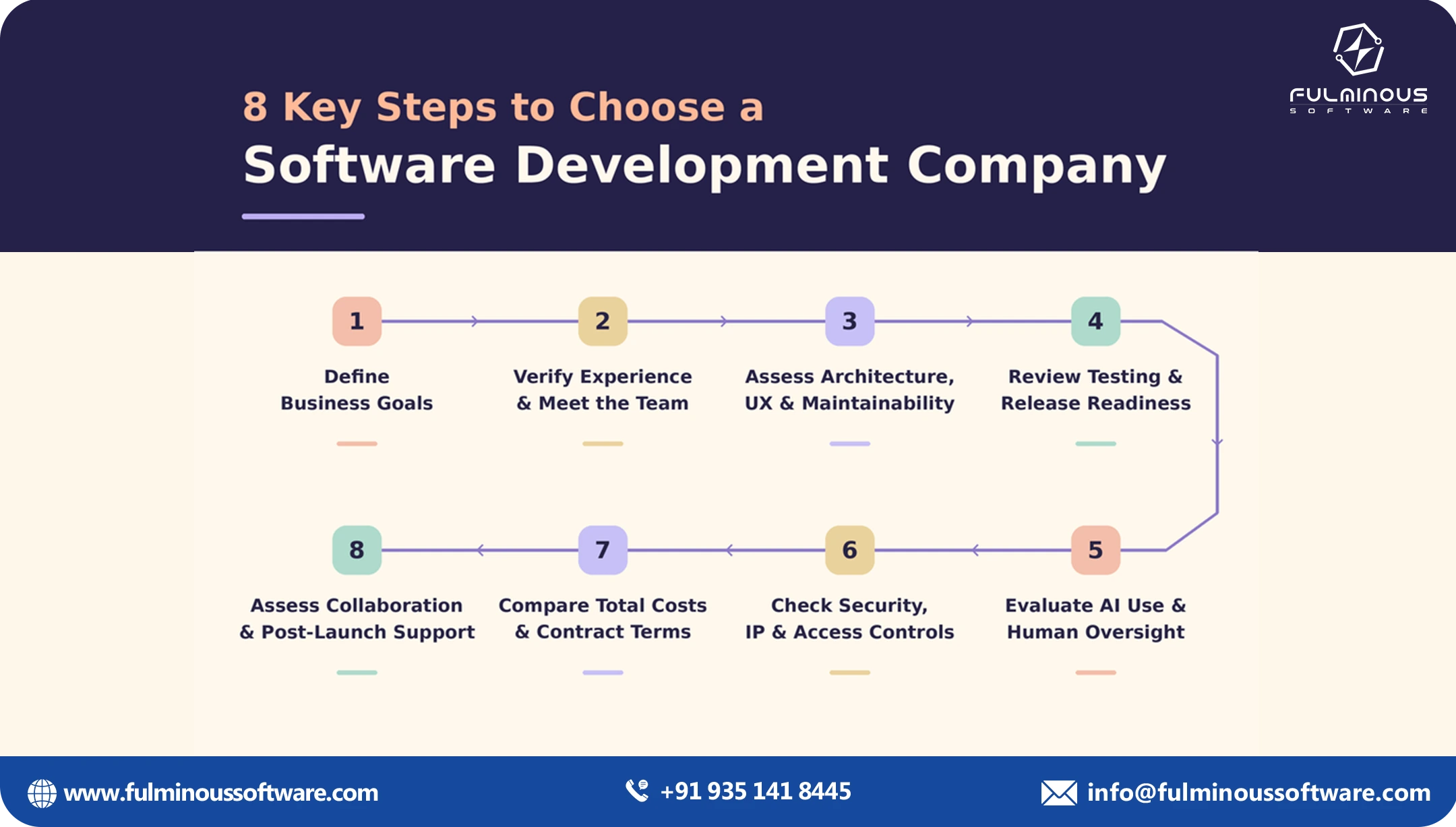
Red flags that should slow you down
Sometimes the warning signs are not in the answers but in the behavior. Watch for these and know how to choose a software development company.
A quote that arrives within a day with no questions asked. Real estimates need real understanding.
A price far below everyone else. Low bids often mean missing scope, junior staff, or a plan to make up the difference through change requests.
Pressure to sign quickly. Discounts that disappear tomorrow are a sales tactic, not a project need.
No access to the people who will do the work. If you only meet salespeople, you do not know what you are buying.
Vague answers to direct questions. If you ask how they test and hear a speech about quality, ask again.
Nothing but good news. Teams that never mention risks, tradeoffs, or limits are not being fully honest.
Reluctance to share references or code ownership terms. Anything that feels like a secret before the contract will feel worse after it.
How to evaluate software proposals fairly
Once the calls are done and the proposals arrive, you will have a pile of documents that look nothing alike. Here is a simple way to evaluate software proposals without getting lost.
Step 1: Read for understanding first. Before you look at the price, check whether the proposal shows the vendor actually listened. Does it repeat your problem in your own words? Does it mention your goals and users? A proposal that could be sent to any client is a template, and a template is a sign of shallow interest.
Step 2: Line up the scope. Make a simple table with each vendor in a column and the main deliverables in rows: discovery, design, development, testing, deployment, documentation, and support. Mark what is included. Gaps will jump out right away.
Step 3: Look at the team and the timeline. Who is named? How many experts, and for how many months? Does the timeline have milestones where you see working software, or is it one long block with a big reveal at the end?
Step 4: Check the assumptions. Good proposals state their assumptions, such as which systems you will provide access to and how fast you will review work. Hidden assumptions are where budgets break. If a proposal lists none, ask for them.
Step 5: Compare price last. Price matters, but it should be the last thing you weigh, and it should be weighed against what is included. A slightly higher quote that covers testing, documentation, and support is often cheaper in the long run.
Step 6: Ask follow-up questions in writing. Send the same follow-up questions to every vendor and compare how they respond. Speed, clarity, and tone all tell you what the working relationship will feel like.
A simple scorecard you can use today
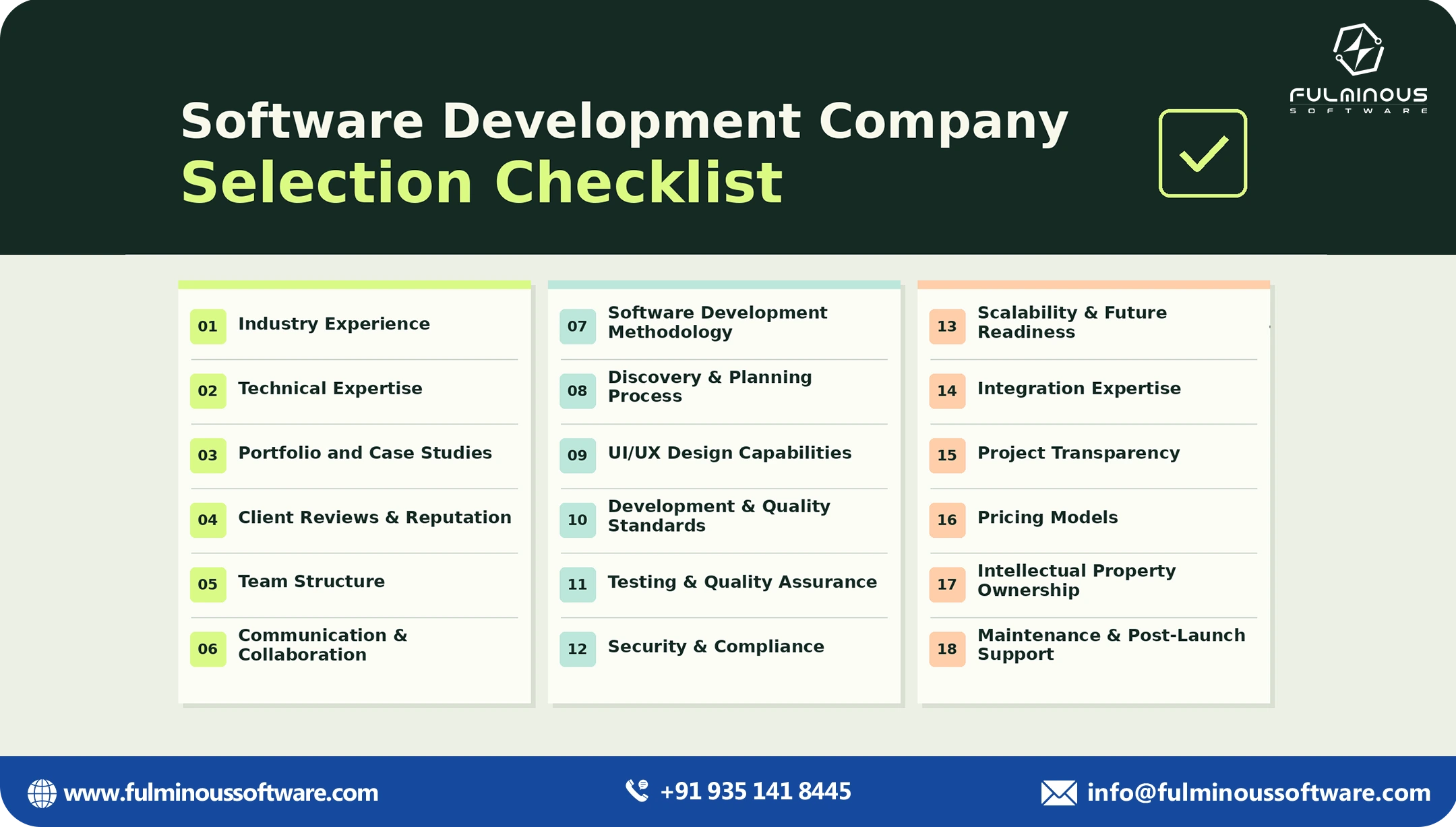
Here is a lightweight software vendor selection checklist you can turn into a spreadsheet in ten minutes. List the vendors in columns. In rows, put these six categories, and score each from 1 (weak) to 5 (strong):
- Relevant experience (questions 1 to 4)
- Process and communication (questions 5 to 8)
- Technical quality and security (questions 9 to 12)
- Commercial clarity (questions 13 to 16)
- Risk handling and support (questions 17 to 20)
- Gut feeling about working with them
Give the first five categories more weight than the last one, but do not ignore it. You will spend months talking to these people. If a vendor scores well on paper but you dread every call, take that seriously.
If two vendors end up close, ask each to run a small paid pilot or discovery phase before you commit to the full project. A few weeks of real work together teaches you more than any sales process can.
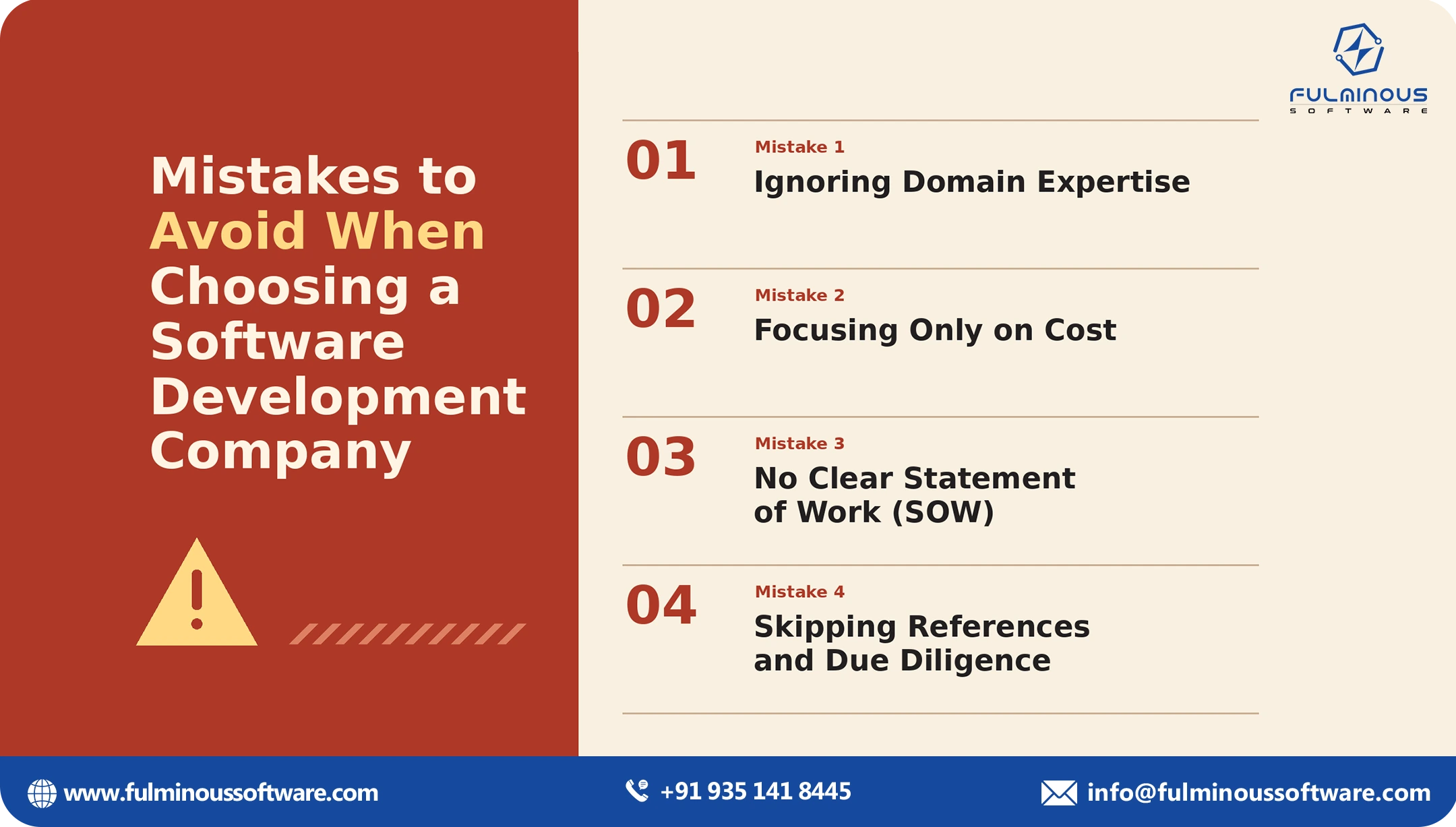
What a strong process looks like
It helps to have something to compare against. When you read vendor answers, you are really asking: does this match how a careful team actually works? Here is the benchmark we use at Fulminous Software, and the one we would suggest you hold every vendor to, including us.
A strong process starts with listening. Before we talk about code, we want to understand your business, your users, and what a good outcome means to you. From there, the work should be split into clear stages with something real to look at at the end of each one. You should see working software early and often, not a surprise at the end. Changes should be discussed openly, with the cost and tradeoffs laid out.
You can read how this plays out day to day on our how we work page. For a view of what our customers say about working with us, see our client reviews. And if you want to understand the advisory side of what we do, including how we help teams decide what to build before they build it, take a look at our software development consulting company page.
We are not saying this to claim every other vendor falls short. We are saying it because when you know what good looks like, bad becomes easy to spot.
Fulminous Software: Your Software Development Partner
Many unique qualities make Fulminous Software your tech partner for software development:
Pick a team that collects details before it answers. The right company wants to know how your business runs, who will use the software, and what problem you are trying to fix. If they start throwing out prices and technical terms in the very first meeting, take it as a warning sign.
Understand how they work. You should know who your contact is, how often you will hear from them, and what happens when your needs change midway. When the process is clear, there are fewer unpleasant surprises.
Look at work they have done before. Ask to see projects close to yours, and try to speak with a past client. A team that has faced similar challenges will notice problems early and help you avoid wasted time and money.
Choose steady progress over big promises. Be careful with anyone who says they will deliver everything at once. Good teams build in small stages, so you can see results early, share feedback, and keep a hold on cost and schedule.
Think about life after launch. Software needs care once it is live. Ask about maintenance, security updates, and how future changes are handled. Confirm that the code will belong to you and that proper documentation is included.
Expect honest, simple communication. A good partner explains things in plain words, is upfront about costs and risks, and never rushes you into signing.
Not sure where to begin? That is okay. At Fulminous Software, we are glad to talk through your idea or your current system, explain your choices clearly, and help you plan the next step. There is no obligation to commit.
Now Choose the Best Software Development Company!
Knowing how to choose a software development company is less about finding a perfect vendor and more about reducing surprises. Ask clear questions, compare the answers in writing, and pay attention to how a team behaves before the contract is signed. The right software partner will be ready to answer all these questions. The wrong one will try to steer you away from them.
Keep this software vendor selection checklist close, use the 20 questions to ask a software development company on every call, and take the time to evaluate software proposals side by side. A few extra weeks of care now can save you months of trouble later.
If you would like to see how a careful, open process works in practice, we would be glad to show you. Start a conversation with our team.
FAQs
Q1. How do I how to choose a software development company if I am not technical?
Focus on what you can judge: clear communication, honest answers, relevant experience, and a visible process. Ask the 20 questions in this guide to how to choose a software development company, speak with past clients, and compare written proposals side by side. If you can, ask a technical friend or advisor to join one call and listen for vague answers.
Q2. How many software development companies should I talk to?
Three to five is a good range. Fewer than three gives you little to compare. More than five takes a lot of time and the differences start to blur. Narrow the list based on experience and fit before you ask anyone for a detailed proposal.
Q3. Should I pick the cheapest vendor?
Rarely. Very low prices often mean smaller scope, less testing, or junior staff. Evaluate what each quote includes before you check numbers. The cheapest proposal can turn into the most expensive project once fixes and changes are added.
Q4. How long does it take to pick a software development partner?
For most projects, plan on four to eight weeks from first contact to signed agreement. That includes calls, proposals, reference checks, and contract review. Rushing this stage is a common cause of regret later.
Q5. What documents should I ask for before signing?
Ask for a written proposal with scope, timeline, and team, a sample of their project documentation, a clear statement of code ownership, payment terms, and details about support after launch. Also ask for at least two client references.
Q6. Is it better to hire a local company or one in another country?
Location matters less than communication and quality. What counts is time zone overlap, language comfort, and how responsive the team is. Some projects benefit from being in the same city, but many run well with a remote team that has a good process.
Q7. What is the difference between a software vendor and a software partner?
A vendor delivers what you ask for. A partner also challenges your ideas, warns you about risks, and cares about the result after launch. Most buyers want a partner, which is why questions about risk, honesty, and past mistakes matter so much.
Q8. How do I know if a proposal is realistic?
Check that it shows an understanding of your specific problem, lists assumptions, breaks work into stages with milestones, and names the people involved. Be careful with proposals that promise a fast timeline and a low price together without explaining how.
Q9. What should I do if I already picked a vendor and I am worried?
Start by asking for a demo of working software and a clear status report. Review whether the scope, timeline, and budget still match. Have an open conversation about your concerns. If trust does not return, make sure you have access to the code and documents so you can move to another team.
Q10. Can a software development company help with an old system we already have?
Yes. Many teams specialize in modernizing older applications, either in stages or by rebuilding parts of them. Look for a vendor who starts by studying your existing system and who can explain how your business will keep running during the work.
 Verified
Expert in Software & Web App Engineering
I am Manish Kumawat, co-founder of Fulminous Software, a top leading customized software design and development company with a global presence in the USA, Australia, UK, and Europe. Over the last 10+ years, I am designing and developing web applications, e-commerce online stores, and software solutions custom tailored according to business industries needs. Being an experienced entrepreneur and research professional my main vision is to enlighten business owners, and worldwide audiences to provide in-depth IT sector knowledge with latest IT trends to grow businesses online.


Partner with Top-Notch Web Application Development Company!
Discuss your Custom Application Requirements on info@fulminoussoftware.com or call us on +91-935 141 8445.
15 Days Risk-Free TrialRecommended Articles